Overview by Pacific regions



“There is a world of difference between viewing the Pacific as ‘islands in a far sea’ and as ‘a sea of islands.’”
Universal social protection is essential for realizing the human right to social security for all, advancing social justice and promoting inclusive growth, and accelerating progress towards achieving the globally agreed 2030 Agenda for Sustainable Development and its Sustainable Development Goals (SDGs). 1 Social protection refers to programs that address risk, vulnerability, inequality and poverty through a system of transfers to people in cash or in-kind.
Social protection programs include various benefits like old age pensions, disability benefits, child benefits, maternity benefits, and assistance for those facing poverty or social exclusion. Social protection plays a crucial role in promoting economic growth, reducing poverty, and enhancing resilience to shocks like economic downturns or natural disasters. 2
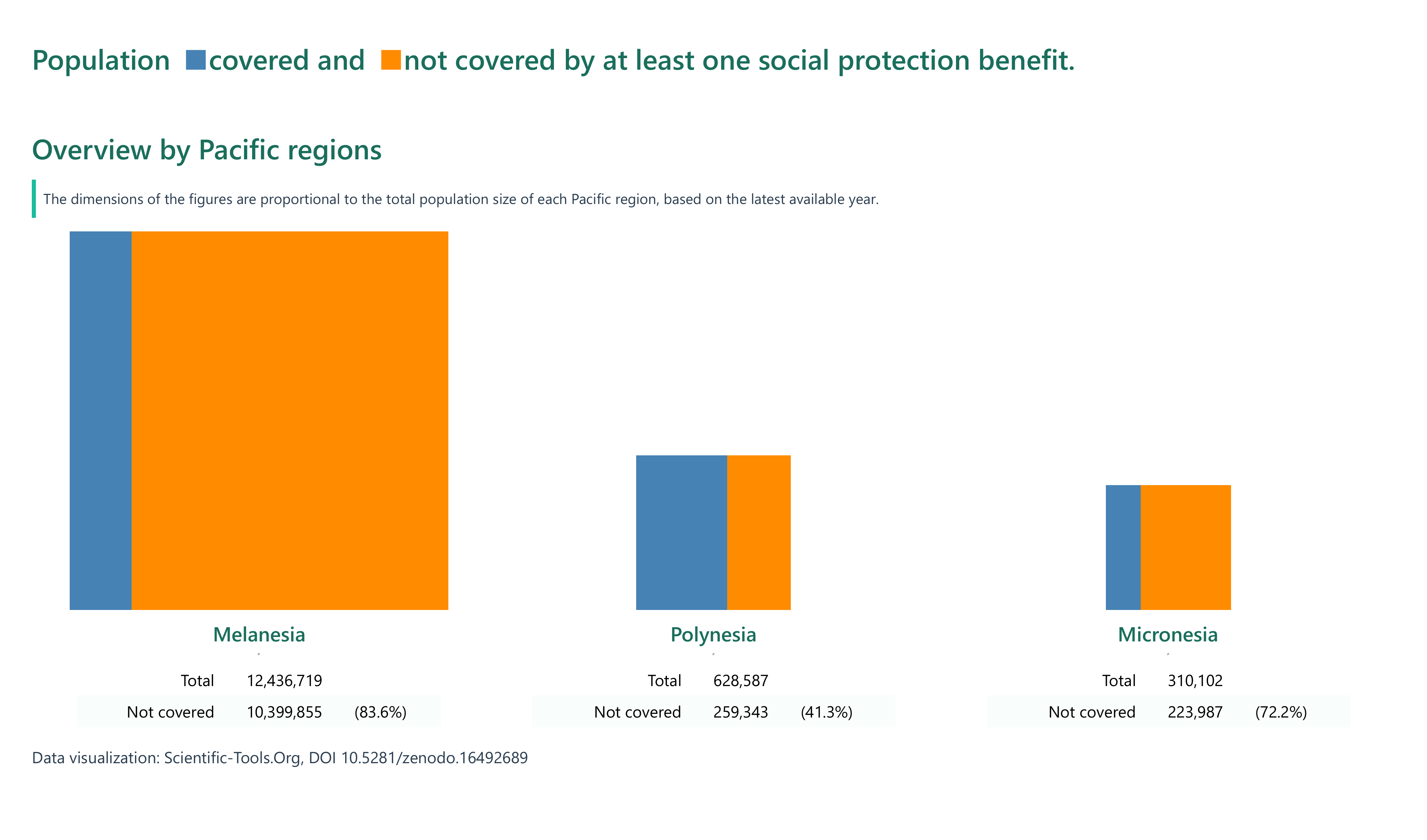
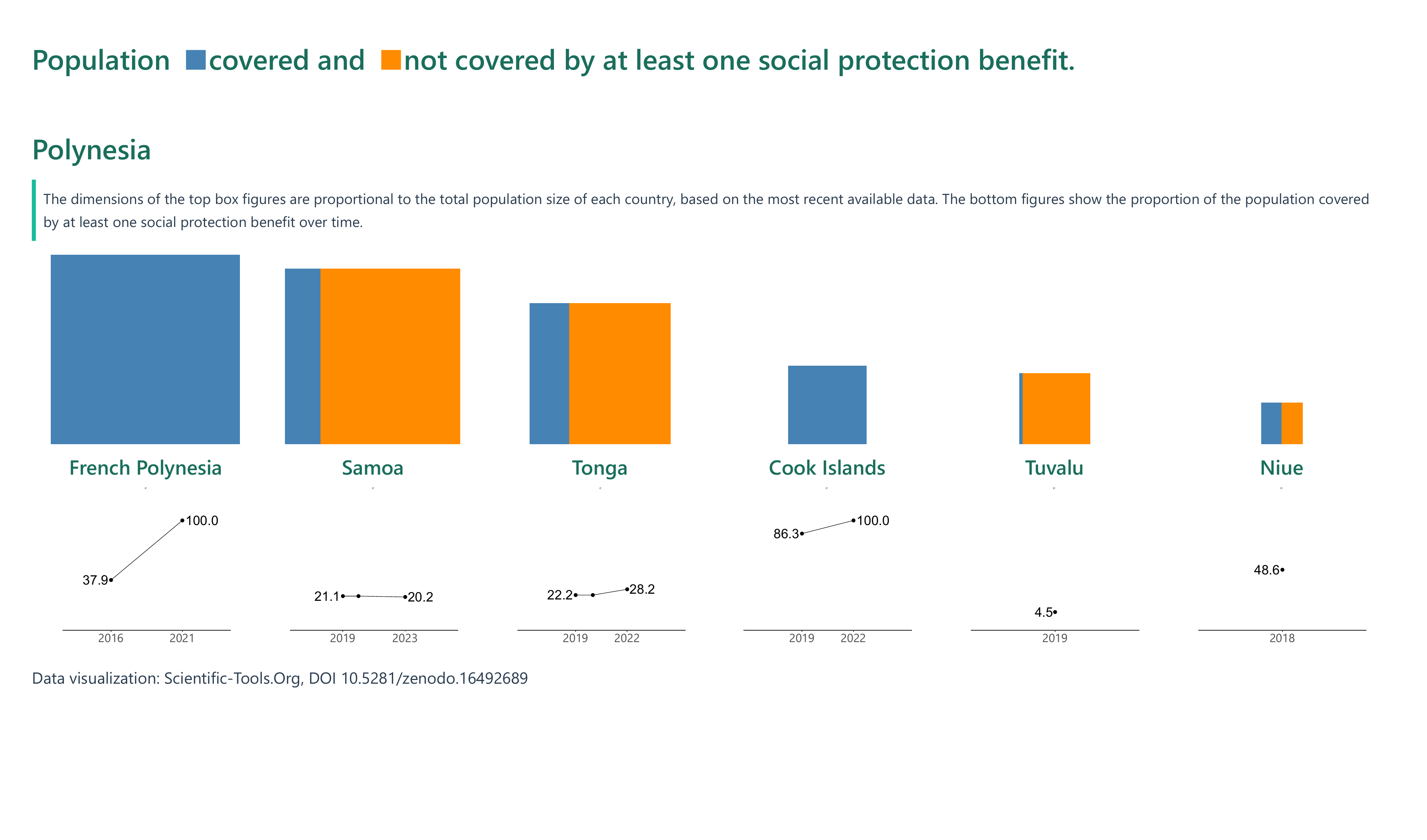
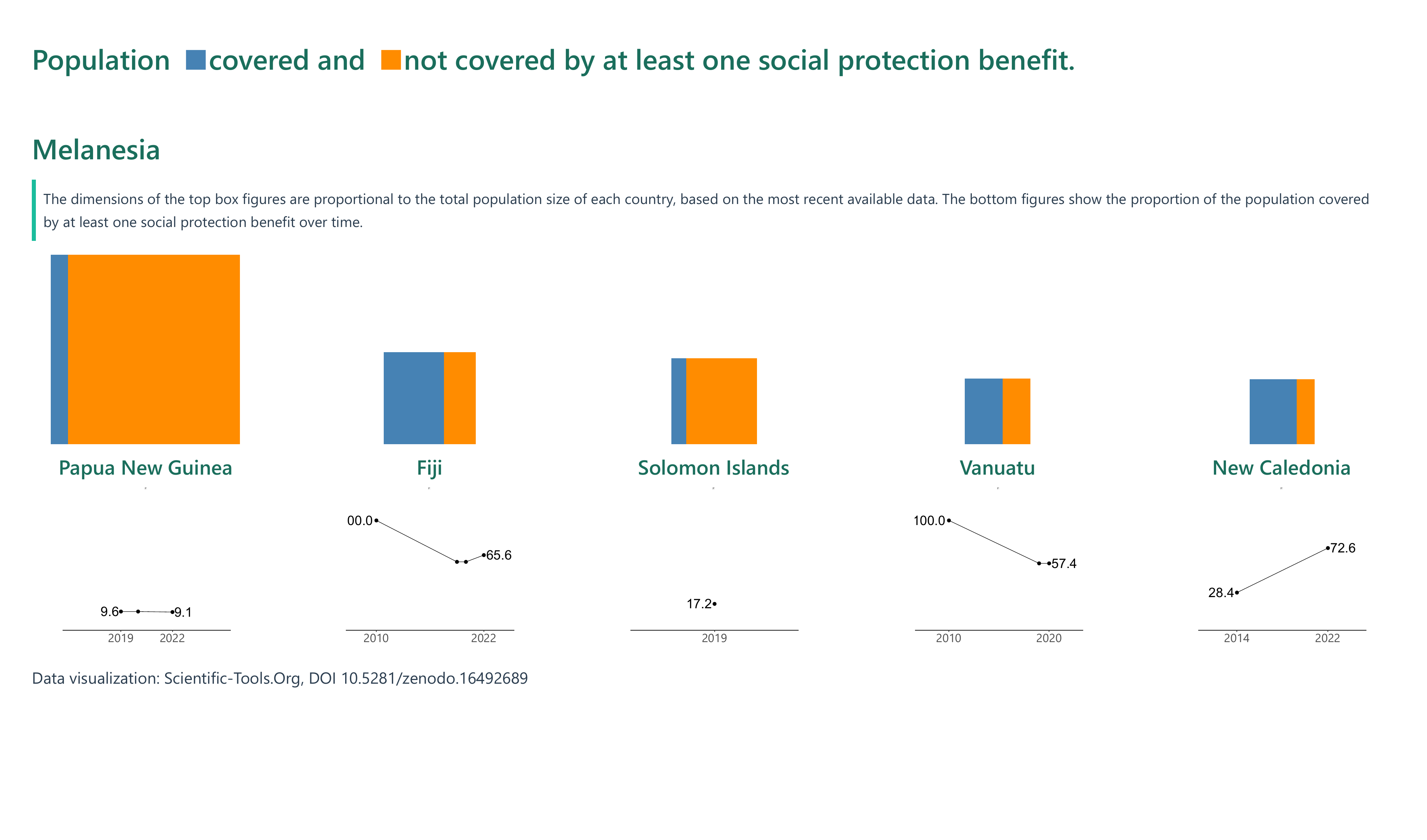
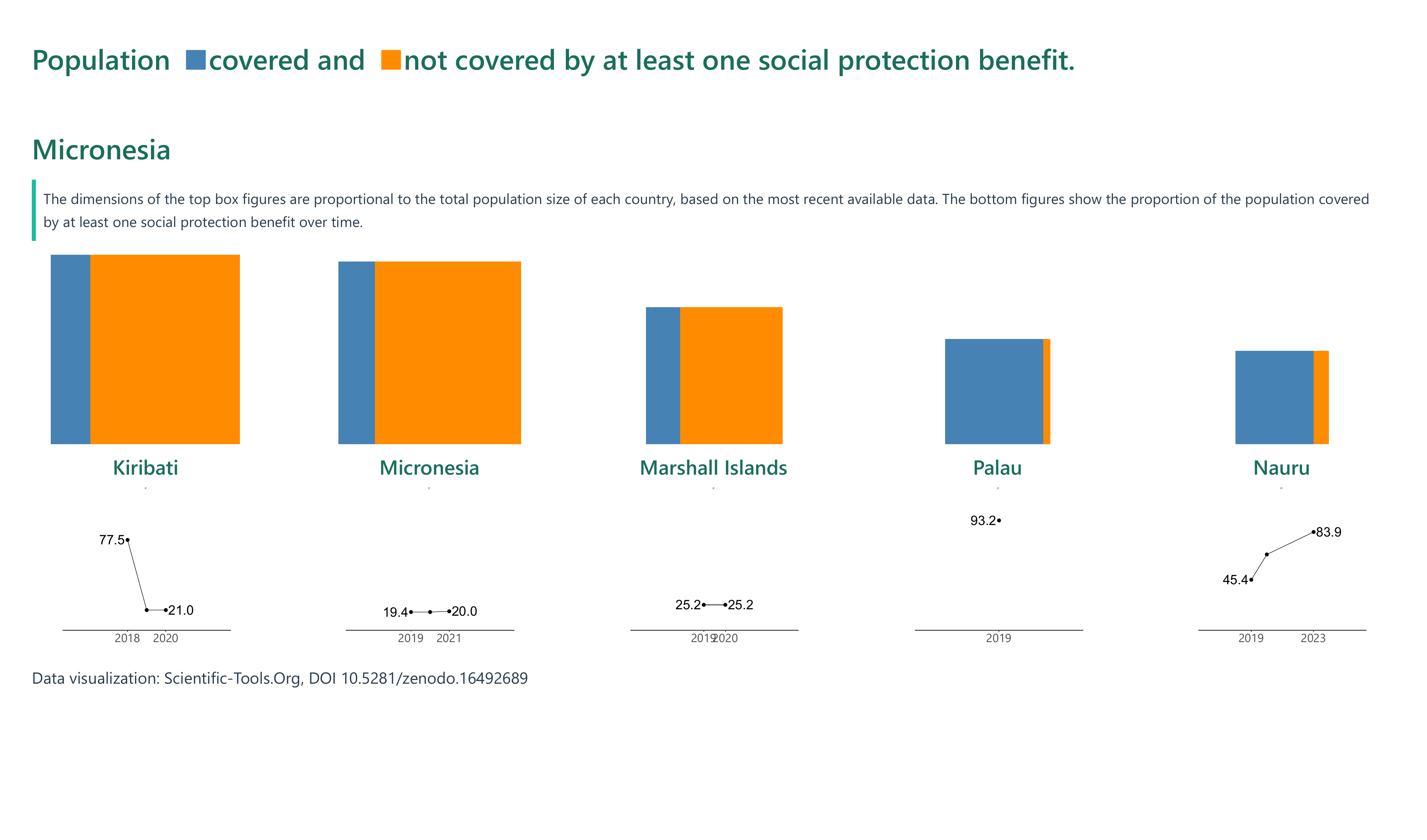
The proportion of the population covered by at least one social protection benefit in Pacific Island nations shows a wide disparity, ranging from as low as 4.5% in Tuvalu (2019) to 100% in countries like French Polynesia (2021) and the Cook Islands (2022). Notable progress was made in New Caledonia, where protection levels more than doubled from 28.4% in 2014 to 72.6% by 2022, and in Nauru, which rose steeply from 45.4% in 2019 to 83.9% in 2023.
However, some countries experienced marked declines or stagnation. Kiribati dropped from a high of 77.5% in 2018 to just 21.0% by 2019, remaining at that level through 2020, while Vanuatu and Fiji, both of which had full protection in 2010, saw reductions to 57.4% and 65.6%, respectively, by 2022. Papua New Guinea reported very low protection of 9%. These contrasting trajectories reflect uneven health financing, insurance coverage, and access to services across the region. To close these gaps, sustained and collaborative global investment is essential to ensure that no population remains unprotected from essential social risks.
“No man is an island, entire of itself; every man is a piece of the continent, a part of the main.”
Social protection also plays a critical role in safeguarding health and well-being. By ensuring access to essential health services and providing income security during periods of illness, unemployment, or disability, social protection systems help reduce the burden on individuals and families.
Coverage of essential health services (SDG 3.8.1) is defined as the average coverage of essential services based on 14 tracer indicators that include reproductive, maternal, newborn and child health, infectious diseases, non-communicable diseases and service capacity and access, among the general and the most disadvantaged population. The indicator is measured as an index reported on a unitless scale of 0 to 100. The 14 indicators are meant to be indicative of service coverage and should not be interpreted as a complete or exhaustive list of the health services or interventions that are required to achieve universal health coverage. 3 Of note, these indicators do not include important diseases recently supported by the World Health Organization resolutions.
The data from 14 Pacific Island countries and territories highlights a generally positive relationship between the availability of social protection benefits and the essential health services coverage index. For instance, Palau, where social protection reaches 93.2% of the population, boasts the highest health services coverage at 64.77. Similarly, Nauru and Fiji, with robust social protection coverage (83.9% and 65.6% respectively), report solid health coverage scores (60.35 and 58.25). Conversely, countries like Papua New Guinea, with only 9.1% of the population covered by social protection, record the lowest health services coverage at 30.39.
However, the relationship between social protection and health services coverage is not strictly linear. The Cook Islands, for example, provide social protection to 100% of the population, yet their health services coverage index is only 45.98 — lower than that of several countries with more limited social protection, such as the Marshall Islands or Samoa. Similarly, Tuvalu has very limited social protection (4.5%) but still achieves a relatively high index score of 52.41. These variations underscore that while social protection is an important enabling factor for health coverage, other elements such as health infrastructure, service quality, and geographic accessibility also play crucial roles.
The essential health services coverage index in 2021 ranged from a low of 30.39 in Papua New Guinea to a high of 64.77 in Palau, highlighting significant disparities in access to core health services. Over time, some countries made notable progress: Nauru rose impressively from 35.09 in 2000 to 60.35 in 2021, and Palau advanced steadily from 47.37 to 64.77 over the same period. Similarly, Kiribati and Solomon Islands both demonstrated strong upward trajectories, increasing by about 20 points since 2000. These gains reflect sustained improvements in health system performance and investment.
In contrast, Papua New Guinea saw only a modest rise from 24.84 in 2000 to 30.39 in 2021, with recent declines after peaking in 2015, suggesting setbacks in service delivery or broader systemic challenges. Niue and Cook Islands, despite high performance for much of the period, experienced significant drops in 2021 — Niue falling from 63.16 to 43.59, and Cook Islands from 63.44 to 45.98 — potentially reflecting the impact of external shocks or data inconsistencies. These mixed trends underscore the need for coordinated regional and global action to ensure resilient and equitable health systems, particularly in small island states facing unique vulnerabilities.
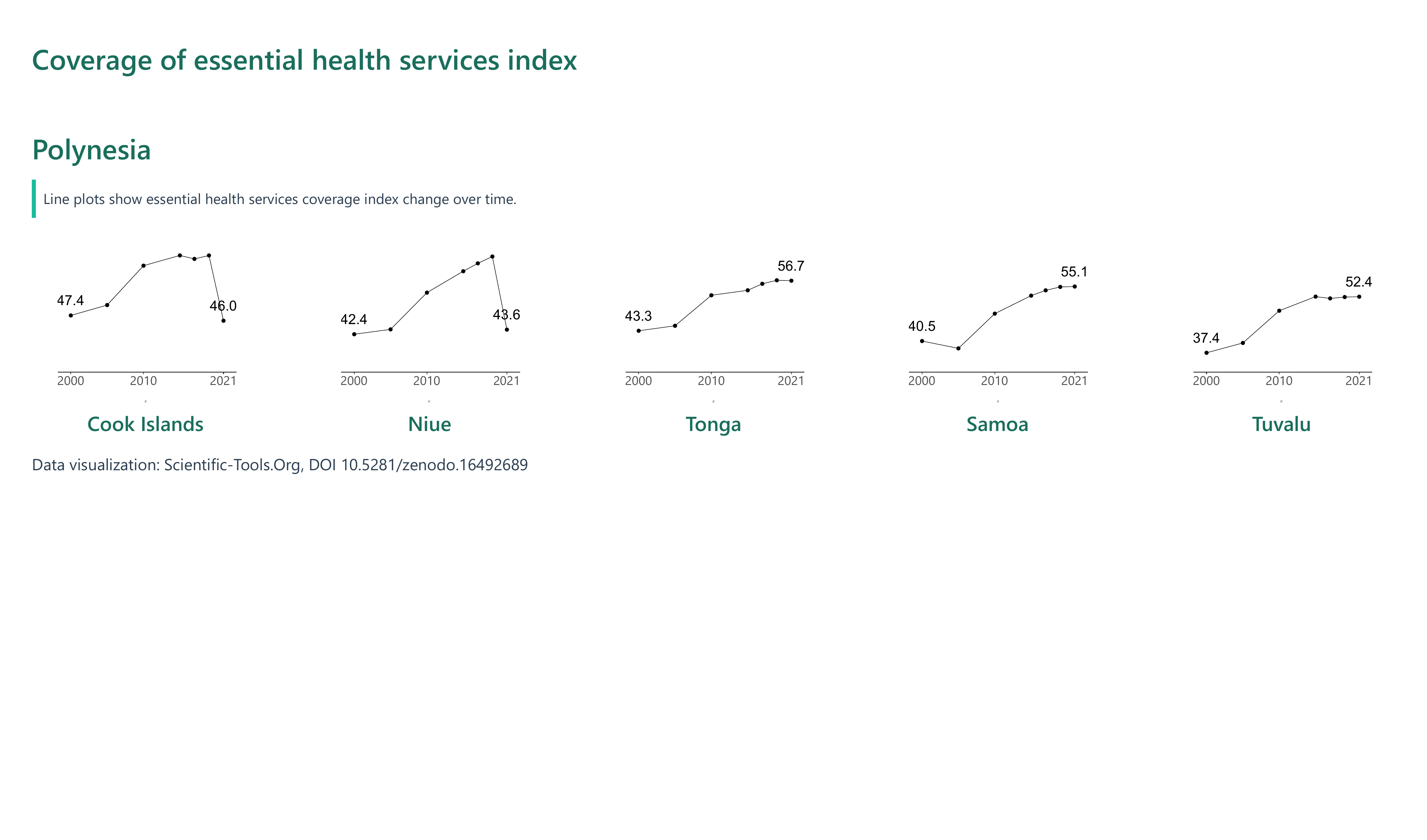
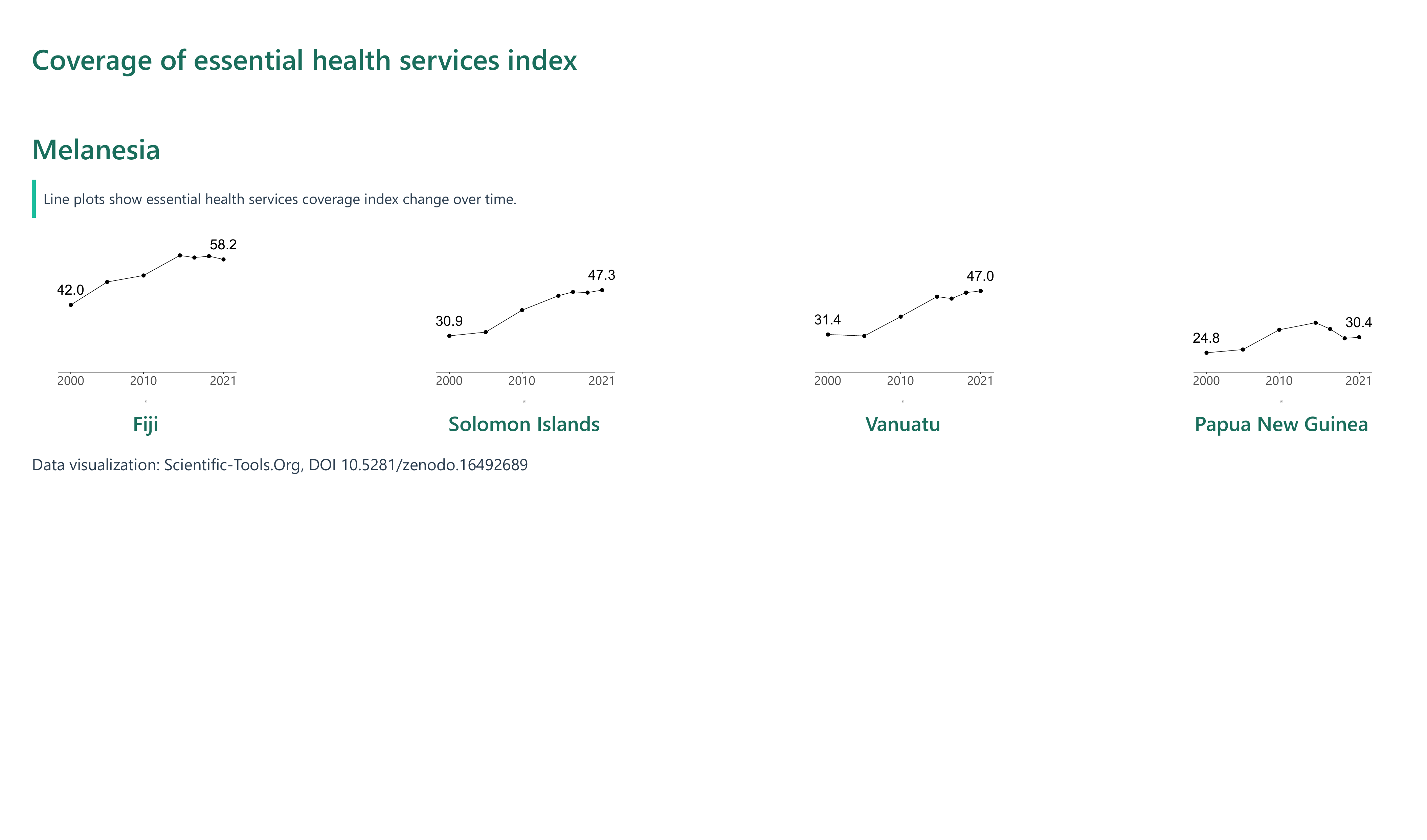
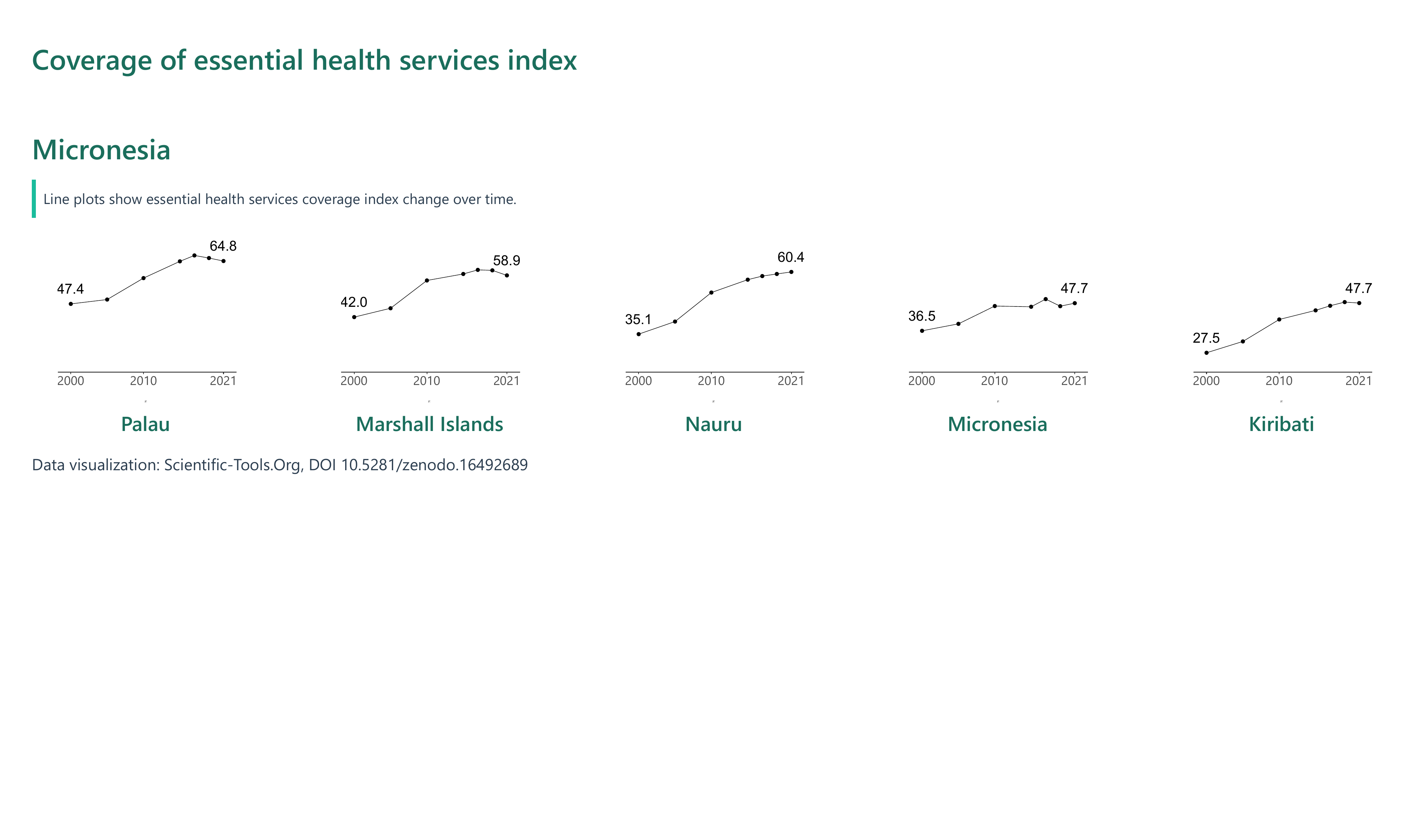
The data across Pacific Island nations reveal persistent and widening disparities in both essential health service coverage and population social protection. While some countries (Palau, the Cook Islands, and Nauru) have demonstrated strong improvements and even achieved universal protection, others (Papua New Guinea and Tuvalu) remain critically underserved. Additionally, reversals in progress in countries such as Vanuatu, Kiribati, and Niue highlight vulnerabilities in health system resilience and the fragility of gains under challenging conditions.
These findings underscore the urgent need for targeted policy action. Regional and international partners must prioritize investments in primary health care systems, health financing, and insurance mechanisms tailored to local contexts. Strengthening data systems, ensuring continuity of services during crises, and supporting community-based models of care are essential strategies. A coordinated, equity-driven approach is vital to achieving universal health coverage and building health systems that are both inclusive and resilient across the Pacific.